


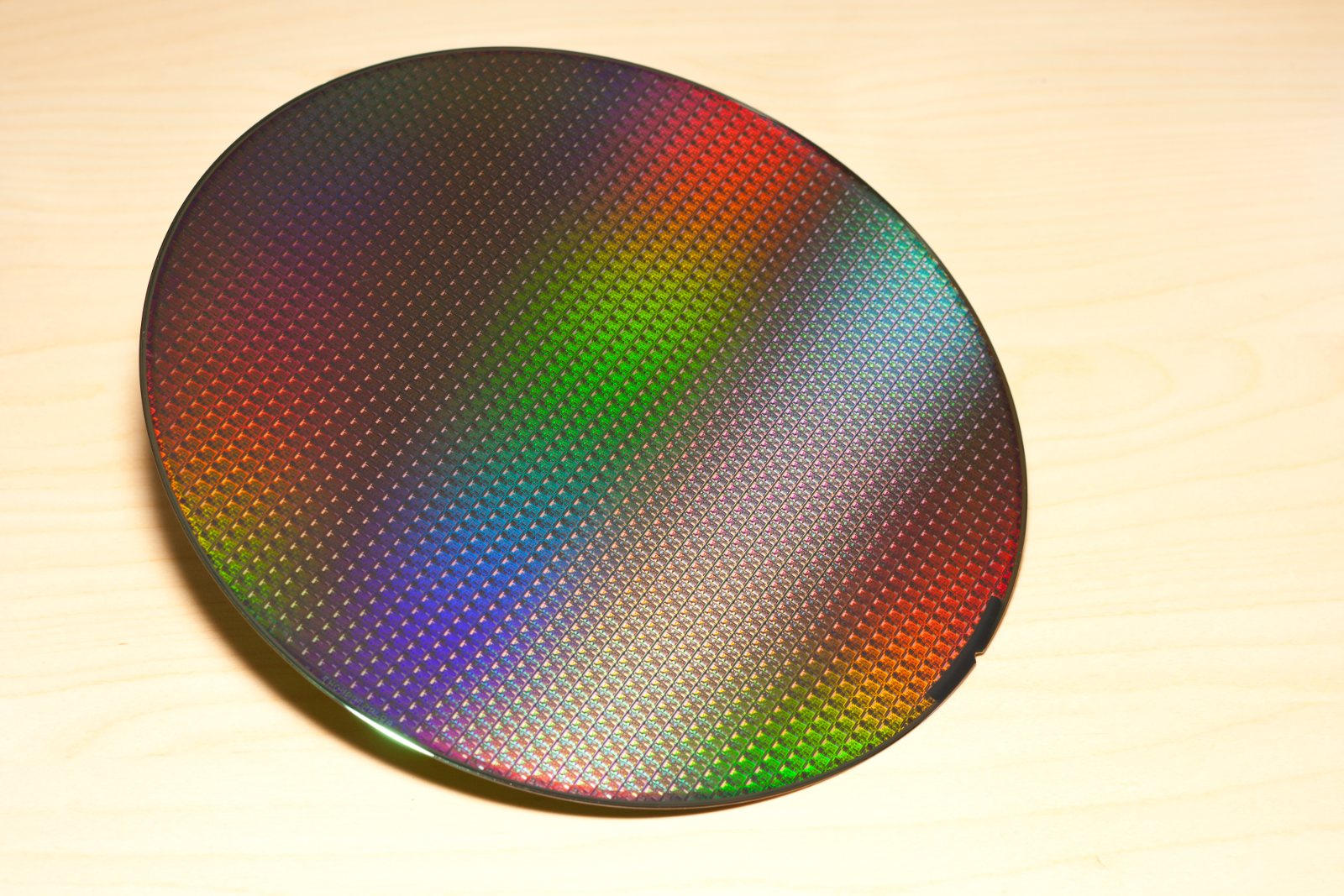
In the second quarter of 2026, one company took in 72.5 cents of every dollar spent on contract chipmaking worldwide. That company is Taiwan Semiconductor Manufacturing Co., and the figure, from the Taipei research firm TrendForce, was a record high, reported by Focus Taiwan in September. Samsung, the nearest rival, managed 5.9 per cent. China’s SMIC was at 5.4.
Numbers like that explain why a component most people never see now shows up in trade deals, tariff schedules, parliamentary hearings and military planning. A modern economy runs on chips the way an older one ran on oil, and the supply of the best chips comes from a few square kilometres of an island that Beijing claims as its own. Add a single Dutch company that builds the only machines capable of printing the most advanced circuits, and you have a supply chain with a handful of chokepoints that every major government is now trying to own, guard or squeeze.
This piece walks through how that happened, what the United States and its allies have done about it, and where Canada fits. Our country isn’t a chipmaking power, but it holds a few cards that matter more than most Canadians realize.
Why Taiwan sits at the centre
TSMC pioneered the “pure-play foundry” model in the late 1980s: it manufactures chips that other companies design. Apple, Nvidia, AMD and Qualcomm draw the blueprints; TSMC builds them. Over three decades, that division of labour turned into a near-monopoly on the hardest part of the process.
The leading edge is where the concentration is most extreme. In its second-quarter 2026 results, TSMC said 3-nanometre chips accounted for 30 per cent of its wafer revenue and 5-nanometre for another 33 per cent. Altogether, technologies at 7 nanometres or smaller made up 77 per cent. Those are the processes used for AI accelerators, flagship phone processors and high-end laptop chips. Quarterly revenue hit US$40.2 billion.
For years, the uncomfortable truth in Washington was that the United States designed most of the world’s advanced chips but built almost none of them. A 2024 report from the Semiconductor Industry Association and Boston Consulting Group put America’s share of global capacity for logic chips below 10 nanometres at zero in 2022. The same report projected that share could reach 28 per cent by 2032 if announced investments held.
That gap is the “Taiwan risk” in a sentence. A blockade, an earthquake or a war in the Taiwan Strait would not just hurt one company. It would stall production of everything from data-centre servers to cars.
ASML and the machine nobody else can build
If TSMC is the factory, the Dutch firm ASML makes the most important tool inside it. ASML is the only company that sells extreme ultraviolet (EUV) lithography systems, the machines that print the finest features on modern chips.
The engineering is borderline absurd. According to ASML’s own product pages, a carbon dioxide laser fires two pulses at a falling droplet of tin, vaporizing it into a plasma that emits light at a wavelength of 13.5 nanometres. That happens up to 50,000 times a second. Because EUV light is absorbed by almost everything, including air and glass, the whole optical path sits in a vacuum and uses multilayer mirrors instead of lenses.
The newest generation, called High-NA EUV, can print features with a resolution of 8 nanometres. It is also staggeringly expensive. Bloomberg reported in April 2026 that each machine costs upwards of €350 million, and that TSMC, ASML’s biggest customer, does not plan to adopt the tools through 2029 to keep costs in check. That’s a fascinating twist: even the monopolist’s best customer has limits.
ASML’s business is booming anyway. The company reported 2025 sales of €32.7 billion and net income of €9.6 billion, with a backlog of €38.8 billion at year end and 2026 sales guidance of €34 billion to €39 billion.
Why one supplier is a policy lever
Because no one else can build an EUV machine, deciding who gets one is effectively deciding who can make leading-edge chips. EUV exports have been restricted since 2019. In March 2023 the Netherlands went further, adding ASML’s most advanced deep ultraviolet (DUV) immersion systems to its export-licence regime, following an agreement among the United States, Japan and the Netherlands. A monopoly in a supply chain is a vulnerability for buyers, but for the government that hosts it, it becomes a lever.
The CHIPS Act: from grants to equity stakes
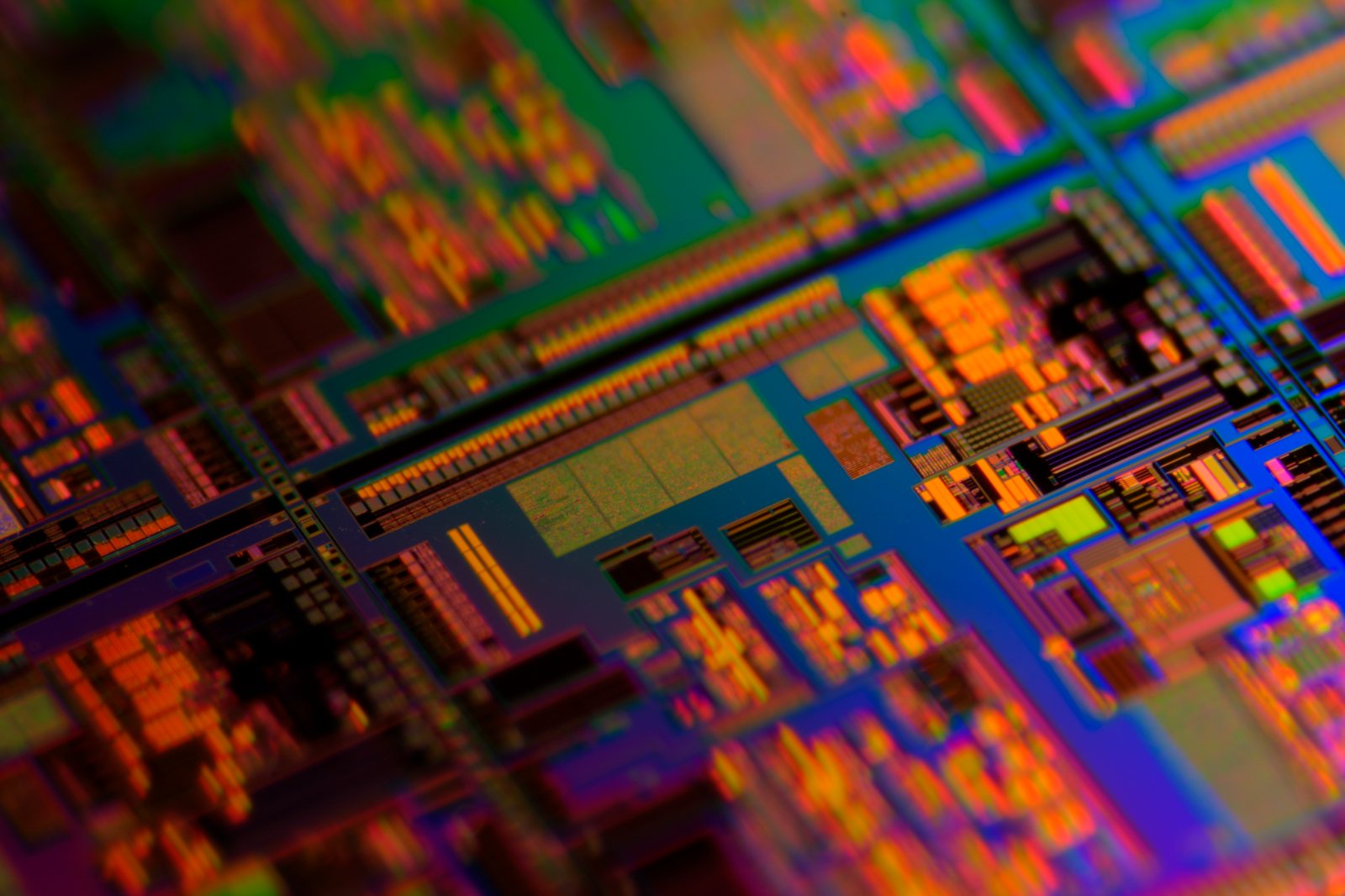
Washington’s answer to the Taiwan problem was the CHIPS and Science Act, signed on August 9, 2022. It appropriated about US$52.7 billion, including roughly US$39 billion in manufacturing subsidies, plus a 25 per cent investment tax credit for chipmaking equipment.
The money worked, at least in drawing announcements. TSMC has expanded its Arizona commitment to US$165 billion, covering six wafer fabs and two advanced packaging plants over time. Its first Arizona fab began production in 2025, with a second slated for the second half of 2027.
Under the second Trump administration, the program changed character. In August 2025, Intel announced that the U.S. government would take a 9.9 per cent stake in the company, buying 433.3 million shares at US$20.47 each. The US$8.9 billion purchase was funded by CHIPS grants Intel had been awarded but not yet received, plus money from a defence-related program called Secure Enclave. A subsidy program had quietly become a sovereign investment fund.
Trade policy has been pulled in too. In January 2026, the United States and Taiwan signed an agreement under which Taiwanese firms committed US$250 billion in direct investment plus US$250 billion in credit guarantees, in exchange for a 15 per cent cap on most U.S. tariffs and preferential treatment for chips imported by companies building American capacity. As of Baker McKenzie’s January summary, the deal still needed approval from Taiwan’s legislature.
Export controls: the stick
The other half of the strategy is denial. Since 2022, the U.S. Commerce Department has steadily restricted the sale of advanced AI chips and chipmaking tools to China, and has leaned on allies to do the same.
The line has not moved in one direction only. In January 2026, Commerce’s Bureau of Industry and Security shifted licence reviews for certain high-end chips bound for China, including Nvidia’s H200, from a presumption of denial to case-by-case. The conditions are strict: third-party testing in the U.S., a cap on exported compute relative to American shipments, and know-your-customer obligations for buyers. A 25 per cent Section 232 tariff on certain advanced chips was imposed at the same time.
Easing on paper didn’t mean sales in practice. In February 2026, the top U.S. export enforcement official told a House committee that Nvidia had not yet sold any H200s to China.
Beijing’s counter-levers
China has chokepoints of its own, mostly in raw materials. Gallium and germanium are small-volume metals used in compound semiconductors, radar, fibre optics and infrared sensors, and China dominates their refining. Beijing restricted their export in 2023 and banned shipments to the United States in December 2024. In November 2025 it suspended that ban until November 27, 2026, which means the question of whether it returns is only weeks away as we write this.
The Nexperia affair showed how quickly this can spill into everyday industry. In September 2025 the Dutch government took de facto control of the Chinese-owned chipmaker over concerns about technology transfer; Beijing responded by blocking exports from Nexperia’s Chinese operations, squeezing automakers that depend on its basic components. These aren’t cutting-edge AI chips. They’re the cheap, boring parts that cars can’t ship without.
Where Canada fits
Canada has no leading-edge fab and isn’t likely to get one. But “chips” isn’t one industry, and several Canadian assets matter more than the headlines suggest.
Packaging in Bromont
IBM’s plant in Bromont, Quebec, opened in 1972 and is described as the largest semiconductor packaging operation in North America. Packaging, the step that protects a chip and wires it to the outside world, has become a bottleneck for AI hardware. In 2025, Ottawa committed a further $210 million from its Strategic Innovation Fund toward advanced packaging there, on top of earlier federal and Quebec support, as part of IBM’s plan to spend $1 billion over five years.
Compound semiconductors in Ottawa
The National Research Council’s Canadian Photonics Fabrication Centre is, by its supporters’ description, the only end-to-end, pure-play compound semiconductor foundry in North America. In May 2026, Industry Minister Mélanie Joly announced plans to spin it off into a commercial entity, BetaKit reported. Ottawa has invested more than $115 million in the facility since 2021.
Critical minerals
This may be Canada’s strongest hand. In July 2026, Teck Resources, the Canada Growth Fund and Natural Resources Canada signed an agreement to expand germanium and antimony output and add gallium capacity at Teck’s Trail smelter in British Columbia, with the Growth Fund investing up to $400 million and the government taking offtake rights. Internationally, Canada launched what is now the Critical Minerals Resilience and Production Alliance at the 2025 G7 summit in Kananaskis; it has announced more than 69 partnerships and investments since.
Controls and the missing strategy
Canada also takes part in the export-control side. In 2024, Ottawa added quantum computers, gate-all-around transistor technology and related chipmaking equipment to its Export Control List. In June 2026, it signed a semiconductor cooperation declaration with Germany.
What Canada still lacks is a stand-alone national chip strategy. In December 2025, a group including Canada’s Semiconductor Council and CMC Microsystems urged Ottawa to fund more R&D, buy Canadian-made chips and subsidize packaging facilities. That call remains unanswered in any comprehensive way.
What to watch next
- November 27, 2026: the expiry of China’s suspension on gallium and germanium exports to the U.S.
- Arizona’s second fab: whether TSMC hits its 2027 target for more advanced production on U.S. soil.
- High-NA adoption: if TSMC holds off until after 2029, rivals willing to pay for the tools could try to close the gap.
- Ottawa’s next move: whether the photonics spin-off and Trail investment become part of a broader plan.
The real lesson for Canada
The chip contest is often framed as a race to build the most advanced factory. That framing misses how the supply chain actually works. Power accrues to whoever controls a chokepoint, whether it’s a Dutch lithography machine, a Taiwanese process recipe or a Chinese refinery for an obscure metal.
Canada will never out-subsidize Washington or out-build Taiwan. In our view, it doesn’t need to. A country that can reliably supply germanium and gallium, package chips at scale in Quebec and run a sovereign compound semiconductor foundry in Ottawa has something allies need. The risk is treating those assets as scattered industrial grants instead of a deliberate strategy. In a world where chips are geopolitics, being a dependable supplier of the unglamorous parts is a form of leverage, and it’s one Canada can actually hold.
Sources and further reading
- Focus Taiwan: TSMC’s global foundry market share hits record (TrendForce data)
- TSMC: Second quarter 2026 results
- Semiconductor Industry Association: Emerging Resilience in the Semiconductor Supply Chain
- ASML: EUV lithography systems
- Bloomberg: TSMC says ASML’s latest chipmaking gear is too pricey to use
- eeNews Europe: ASML 2025 results
- Intel: Agreement with the Trump administration
- Manufacturing Digital: Inside TSMC’s US$165bn U.S. investment
- Baker McKenzie: U.S. and Taiwan finalize trade agreement
- Willkie Farr & Gallagher: BIS paves the way for chip exports to China
- Fastmarkets: China suspends export prohibition on gallium, germanium and antimony
- BetaKit: Ottawa plans to spin off federal semiconductor facility
- Teck, Canada Growth Fund agreement on Trail strategic metals
- Government of Canada: Critical Minerals Resilience and Production Alliance
- The Logic: Semiconductor groups call for national chip strategy






Leave a comment