


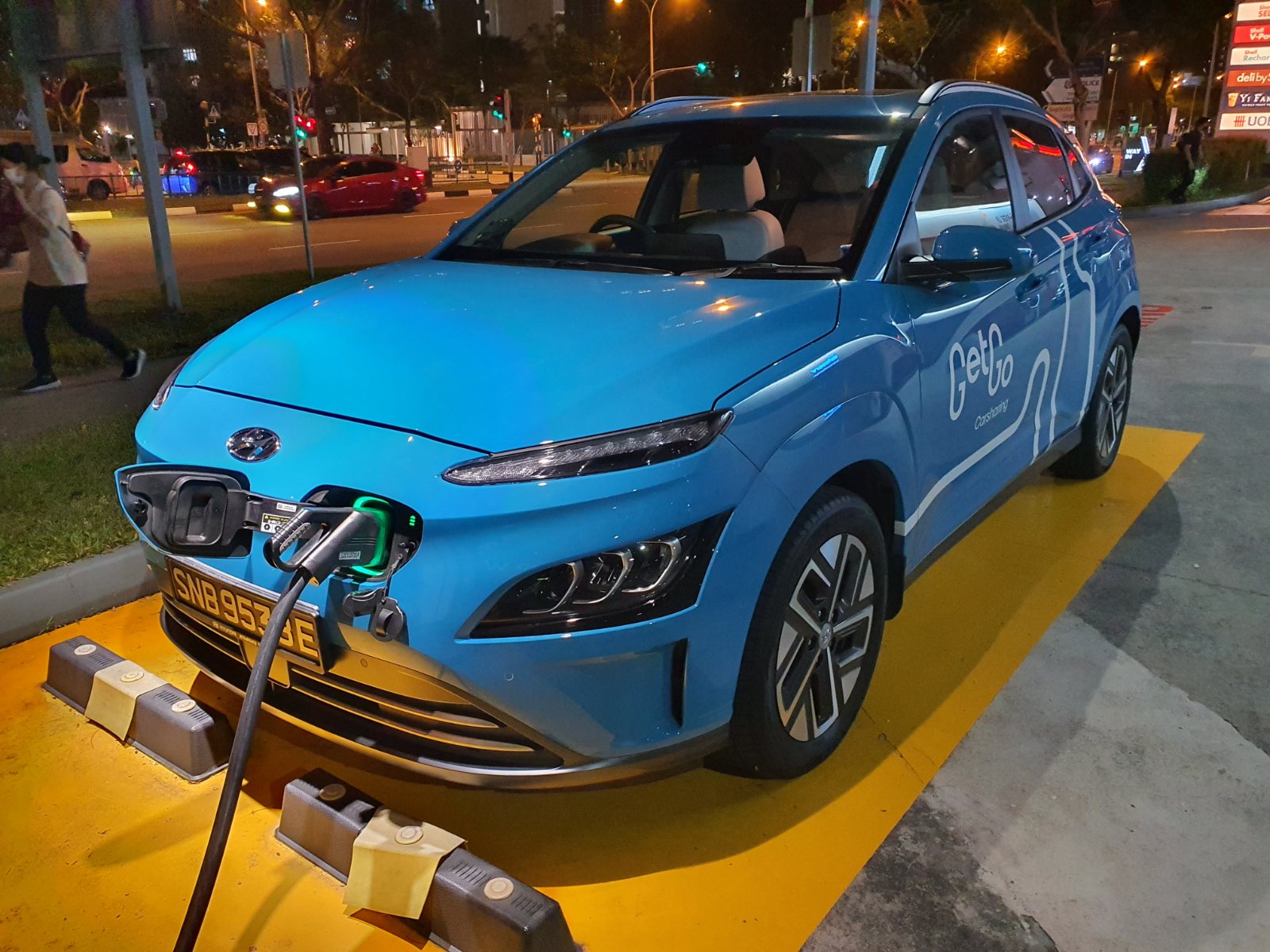
In February 2026, Chinese automaker Changan and battery giant CATL showed off a small electric car called the Nevo A06 with something unusual under the floor: a 45 kWh pack made with sodium instead of lithium. Electrek described it as the world’s first mass-produced passenger EV with a sodium-ion battery, and the pitch was aimed squarely at people who live somewhere cold. CATL says the cells keep 90 per cent of their usable capacity at minus 40 degrees.
For Canadian drivers who have watched their range shrink on a January morning in Winnipeg, that’s an eye-catching claim. It’s also a sign of how quickly the battery business is changing. Five years ago, the conversation was about one chemistry getting slowly cheaper. Today there are several competing recipes, prices have fallen below a threshold the industry once treated as the holy grail, and the geography of where batteries get made has turned into a political fight, including here at home.
This piece looks at what is inside today’s EV batteries, what’s coming next, what they cost, and how Canada’s own bet on battery manufacturing has fared.
Two chemistries run the market today
Almost every EV on the road uses a lithium-ion battery. The differences come mostly from the cathode, the positive electrode, and two families dominate.
NMC: nickel, manganese, cobalt
NMC cells pack more energy into the same weight and space, which is why they long powered premium, long-range vehicles. The trade-offs are cost and supply-chain baggage: nickel and cobalt are expensive, and cobalt mining carries well-documented ethical and geopolitical concerns.
LFP: lithium iron phosphate
LFP cells use iron and phosphate, which are cheap and plentiful. They are heavier for a given amount of energy, but they last for more charge cycles and are considered more thermally stable. Chinese manufacturers bet heavily on them, and the bet paid off.
According to the International Energy Agency’s Global EV Outlook 2026, LFP accounted for more than 55 per cent of EV batteries deployed worldwide in 2025, up from nearly half in 2024. Outside China the picture is very different: there, almost 80 per cent of batteries still used nickel-containing chemistries. The IEA also found that LFP packs were more than 40 per cent cheaper per kilowatt-hour on average than NMC.
| NMC | LFP | |
|---|---|---|
| Energy density | Higher | Lower |
| Average pack price, 2025 (BNEF) | US$128/kWh | US$81/kWh |
| Key materials | Nickel, cobalt, manganese, lithium | Iron, phosphate, lithium |
| Typical use | Long-range and performance EVs | Standard-range EVs, grid storage |
What batteries cost now
BloombergNEF’s annual survey is the closest thing the industry has to an official price index. In December 2025, it reported that average lithium-ion pack prices fell 8 per cent to US$108 per kilowatt-hour. Packs for battery-electric vehicles averaged US$99, the second straight year under US$100. Stationary storage packs dropped to just US$70.
Context helps here. A year earlier, BNEF had recorded a 20 per cent drop to US$115/kWh in 2024, the steepest decline since 2017, driven by manufacturing overcapacity and the shift to LFP. The US$100 mark has long been cited as roughly where EVs can match gas cars on upfront price without subsidies.
Where you build matters a lot. BNEF’s 2025 numbers put average pack prices at US$84/kWh in China, US$121 in North America and US$131 in Europe. That gap is the single most important fact for anyone trying to build a battery industry outside China, and it hangs over every Canadian plant announcement.
One caution: the IEA noted that lithium prices in early 2026 were more than double what they’d been a year earlier, though still about 70 per cent below their 2022 peak. BNEF expected pack prices to fall again in 2026, but the era of easy declines may be ending.
Solid-state: closer, but still not in your driveway
Solid-state batteries replace the liquid electrolyte that shuttles lithium ions between electrodes with a solid material. The promise is higher energy density, faster charging and lower fire risk. The problem has always been manufacturing them at scale and at a reasonable price.
2026 has brought real movement, mostly in China and mostly in a halfway form:
- Semi-solid-state is already on sale. SAIC’s MG 4X opened pre-orders in China in May 2026 starting at 99,800 yuan, with an optional 64.2 kWh semi-solid pack. Electrek reported that the design cuts liquid electrolyte to about 5 per cent, and that SAIC planned to bring the technology to Europe by the end of 2026.
- All-solid-state is targeting 2027. BYD says it will launch its first EV with all-solid-state cells in limited numbers in 2027, with mass production around 2030. CATL, Geely and Changan are aiming for similar timelines.
- Western players are partnering up. QuantumScape opened its Eagle Line pilot facility in 2026 and signed Honda as its second major automaker partner after Volkswagen.
Our read: expect solid-state cells first in luxury models and in small numbers before the end of the decade. For a typical buyer, the battery in a 2027 or 2028 EV will almost certainly still be conventional lithium-ion.
Sodium-ion: the cold-weather wildcard
Sodium is far more abundant than lithium, and sodium-ion cells avoid lithium, nickel and cobalt entirely. Their weakness has been energy density. CATL’s Naxtra cells reach about 175 Wh/kg, close to LFP territory, and the company said in April 2026 it aims to match LFP within three years.
Sodium-ion is still tiny. The IEA put global sodium-ion manufacturing capacity at just over 1 per cent of lithium-ion’s and noted ranges of up to about 350 km, well short of typical lithium-ion EVs. But its best early market may be stationary storage: Electrek reported in April 2026 that CATL had landed a 60 GWh sodium-ion order for energy storage.
For a country with long, brutal winters, the cold-weather numbers are the part to watch. If they hold up in independent testing, sodium-ion could make a cheap second car or a city runabout far more practical in places like Saskatoon or Sudbury.
Canada’s battery bet: a mixed scorecard
Canada spent the early 2020s trying to turn its critical minerals and auto sector into a battery supply chain. The ambition was real, and so was the money. By mid-2025, The Logic counted $52.5 billion in federal and provincial support earmarked for the EV industry, and warned that more than $32 billion of $46 billion in major projects were delayed or in serious trouble.
Northvolt Six: the project that collapsed
The most painful case is Northvolt’s planned $7-billion gigafactory in Saint-Basile-le-Grand and McMasterville, southeast of Montreal. Announced in 2023 with major provincial and federal support, it was meant to produce 60 GWh of cells a year. Then the Swedish parent filed for bankruptcy in March 2025.
Here is where things stand, based on the reporting we could verify:
- In September 2025, Quebec ended its financing of the project and acknowledged a $270-million loss on its investment in the Swedish parent.
- Days later, a Quebec judge placed Northvolt’s North American subsidiary under creditor protection. Global News reported that the province had recovered about $200 million from frozen accounts and that the court authorized steps toward the sale or repossession of the land. U.S. firm Lyten, which bought most of Northvolt’s European assets, had expressed interest, but Quebec declined to provide the additional funding its different plan required.
- In June 2026, Quebec’s auditor general concluded that the province’s battery investments were poorly planned, lacking clear objectives and timelines. Of 11 companies that received a combined $2.2 billion in authorized aid, four had sought creditor protection.
NextStar Energy: built, but changing shape
Windsor’s NextStar Energy plant, originally a joint venture of Stellantis and LG Energy Solution, is the success story so far, if a complicated one. It is Canada’s first large-scale battery manufacturing facility, with more than $5 billion invested. In February 2026, the partners announced that LGES would buy Stellantis’s 49 per cent stake and take full ownership, subject to approvals. The plant, with more than 1,300 workers at the time, will expand into energy storage systems while Stellantis remains a customer.
That pivot tells you something. With EV demand in North America softer than expected, a battery plant that can also serve the booming grid-storage market is a much safer asset.
The rest of the map
Other projects are in varying states. Volkswagen’s PowerCo plant in St. Thomas, Ontario, was still moving forward and hiring in mid-2025, according to The Logic, while Honda’s planned Ontario investment had been paused. Industry Minister Mélanie Joly has argued that Canadian-made batteries could also serve defence uses, telling The Logic in 2025 that “Battery is about storage” whether it’s in a car or a submarine.
What it means for buyers
If you’re shopping for an EV in Canada over the next couple of years, the chemistry question is worth a few minutes of homework:
- Ask which chemistry you’re getting. Many automakers offer LFP in standard-range trims and NMC in long-range ones. Read the owner’s manual’s charging advice for that specific pack, since recommendations differ by chemistry.
- Weigh price against range. LFP’s cost advantage is real, but it stores less energy per kilogram, so compare winter range estimates rather than headline numbers.
- Don’t wait for solid-state. Mainstream vehicles with all-solid-state packs are unlikely before the end of the decade.
- Watch for sodium-ion in small cars and home storage. It may reach Canadian showrooms first in budget models or backup power systems.
Incentives, warranties and resale values vary by province and model, so check the details with your dealer and, for larger financial decisions, with a financial adviser.
The real story is diversification
The future of EV batteries is not one breakthrough chemistry replacing everything else. It’s a menu: cheap LFP for everyday cars and grid storage, high-nickel cells for long range, sodium-ion for cold climates and low-cost uses, and solid-state for premium vehicles once factories can make it affordably. Prices have already dropped to the point where batteries aren’t the main obstacle to affordable EVs, at least in China.
Canada’s challenge is that it tried to buy its way into the most competitive manufacturing business on earth just as prices collapsed and North American demand stalled. Northvolt’s failure was expensive. NextStar’s shift toward storage may be the more realistic template: build plants flexible enough to serve whatever the market needs, and lean on what Canada genuinely has in abundance, from critical minerals to clean electricity. That’s a less glamorous story than “Canada becomes a battery superpower,” but it’s one more likely to survive the next downturn.
Sources and further reading
- BloombergNEF: Lithium-ion battery pack prices fall to $108 per kilowatt-hour (2025)
- BloombergNEF: Battery pack prices see largest drop since 2017 (2024)
- International Energy Agency: Global EV Outlook 2026, electric vehicle batteries
- Electrek: First sodium-ion battery EV debuts
- Electrek: CATL launching sodium-ion batteries in EVs
- Electrek: CATL 60 GWh sodium-ion storage deal
- Electrek: MG 4X with semi-solid-state battery
- Electrek: BYD’s solid-state battery timeline
- Electrek: Honda and QuantumScape team up
- The Logic: Canada’s EV dream has become a nightmare
- The Logic: Made-in-Canada EV batteries could be repurposed for defence
- CTV News: Quebec ends funding for Northvolt
- Global News: Quebec judge declares Northvolt insolvent
- Global News: Quebec auditor on battery company investments
- Stellantis: LG Energy Solution to acquire full ownership of NextStar Energy




Leave a comment