


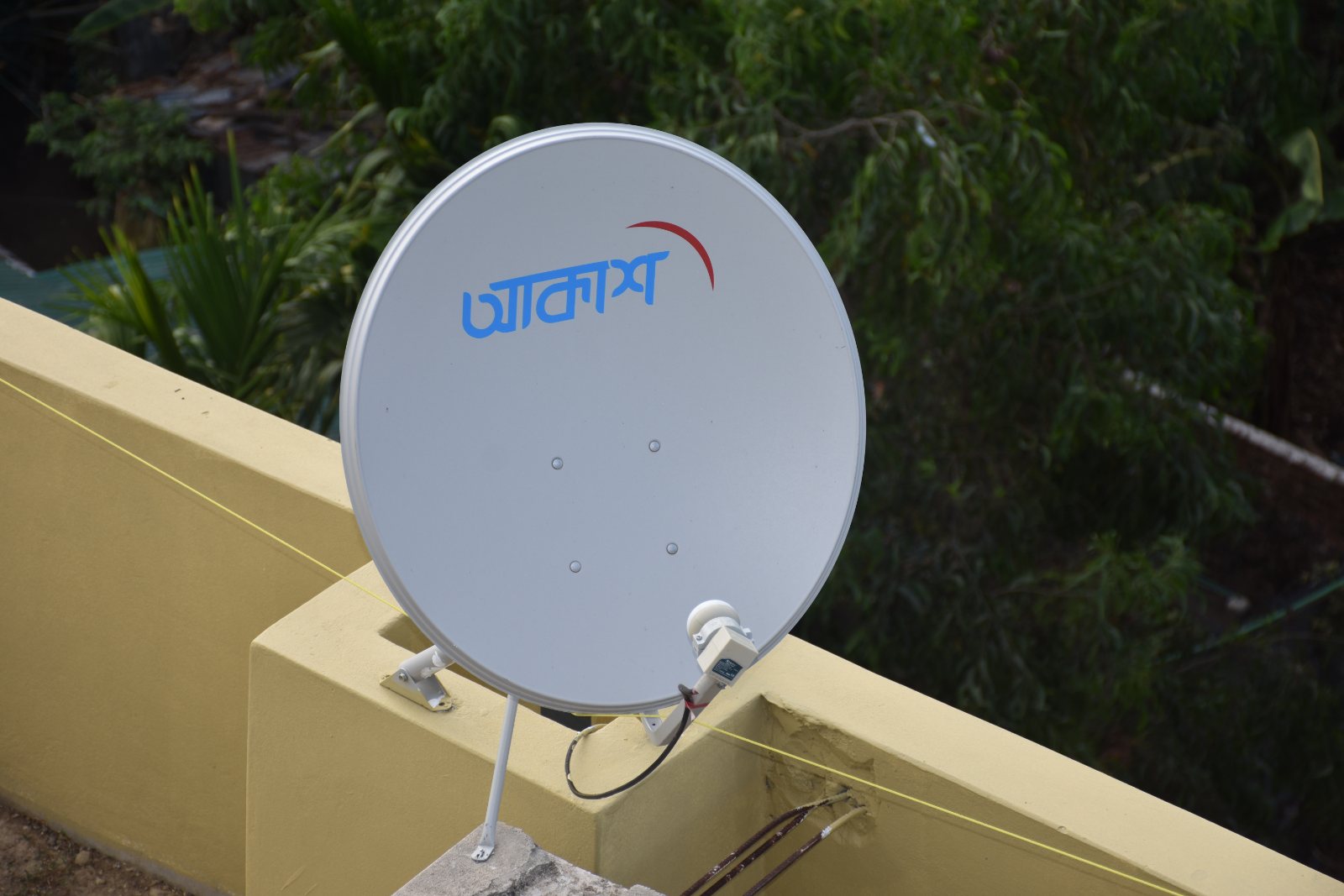
In late September 2026, Prime Minister Mark Carney said something that would have sounded strange from a Canadian leader only a few years ago. On Starlink, the satellite internet service that many rural Canadians now depend on, he said Canada “will diversify away from, no question.” A few days later, SpaceX used its giant Starship rocket to put 26 of its new V3 Starlink satellites into orbit, each designed to deliver roughly 10 times the downlink capacity of the previous generation.
Those two events capture the tension at the heart of rural connectivity in this country. Satellite internet in low Earth orbit has done something decades of government programs couldn’t: it has made fast, usable internet available almost anywhere in Canada, from a cabin on the Gaspé to a farm near Swift Current. But the service most people use is owned by one American company, and Ottawa is now spending billions to build a Canadian alternative.
Here’s how the technology works, what the main players offer, what it actually costs, and the downsides that astronomers and space-safety experts keep flagging.
Why rural Canada needed something new
The federal government’s benchmark for acceptable home internet is 50 megabits per second down and 10 up. By that standard, Canada has made real progress: according to Innovation, Science and Economic Development Canada, access rose from 79 per cent of Canadians in 2014 to 93.5 per cent in 2022. The goal is 98 per cent by the end of 2026 and 100 per cent by 2030.
Averages hide the problem, though. ISED’s Universal Broadband Fund page, citing the CRTC’s latest monitoring data, says only 46 per cent of rural households and 35 per cent of First Nations households on reserves have access to 50/10 service, compared with nearly 99 per cent in cities. Running fibre to every farmhouse and remote community is slow and expensive. Even with a $3.225-billion Universal Broadband Fund and the CRTC’s own Broadband Fund, which reports $780.1 million awarded across 67 projects, the last few per cent are the hardest.
That’s the gap low Earth orbit satellites were built to fill.
How LEO satellite internet works
Traditional satellite internet uses a few large geostationary satellites parked about 36,000 kilometres above the equator. They stay fixed relative to the ground, which makes aiming a dish easy, but the round trip is so long that latency, the delay before data starts flowing, is painful for video calls and gaming.
Low Earth orbit (LEO) systems flip that model:
- Much lower altitude. Starlink’s satellites orbit at roughly 500 to 600 km, while Telesat’s Lightspeed will fly higher, at about 1,300 km, according to Global News. The shorter distance cuts latency dramatically.
- Thousands of satellites. Because each satellite races across the sky in minutes, you need a large constellation so another one is always overhead. Starlink had more than 10,000 satellites in orbit by mid-2026.
- Electronically steered dishes. User terminals use phased-array antennas that track satellites without physically moving.
- Lasers in space. Newer satellites pass traffic to each other with optical links, which lets service reach places far from any ground station, including the Arctic.
For Canadians, the hardware details matter. Starlink’s specification sheet for its Standard dish lists an operating range of minus 30 to plus 50 degrees Celsius and the ability to melt up to 40 mm of snow an hour, drawing an average of 75 to 100 watts. That’s fine for most of southern Canada, but anyone in a truly frigid spot should know where the rated limit sits.
The three constellations to know
Starlink
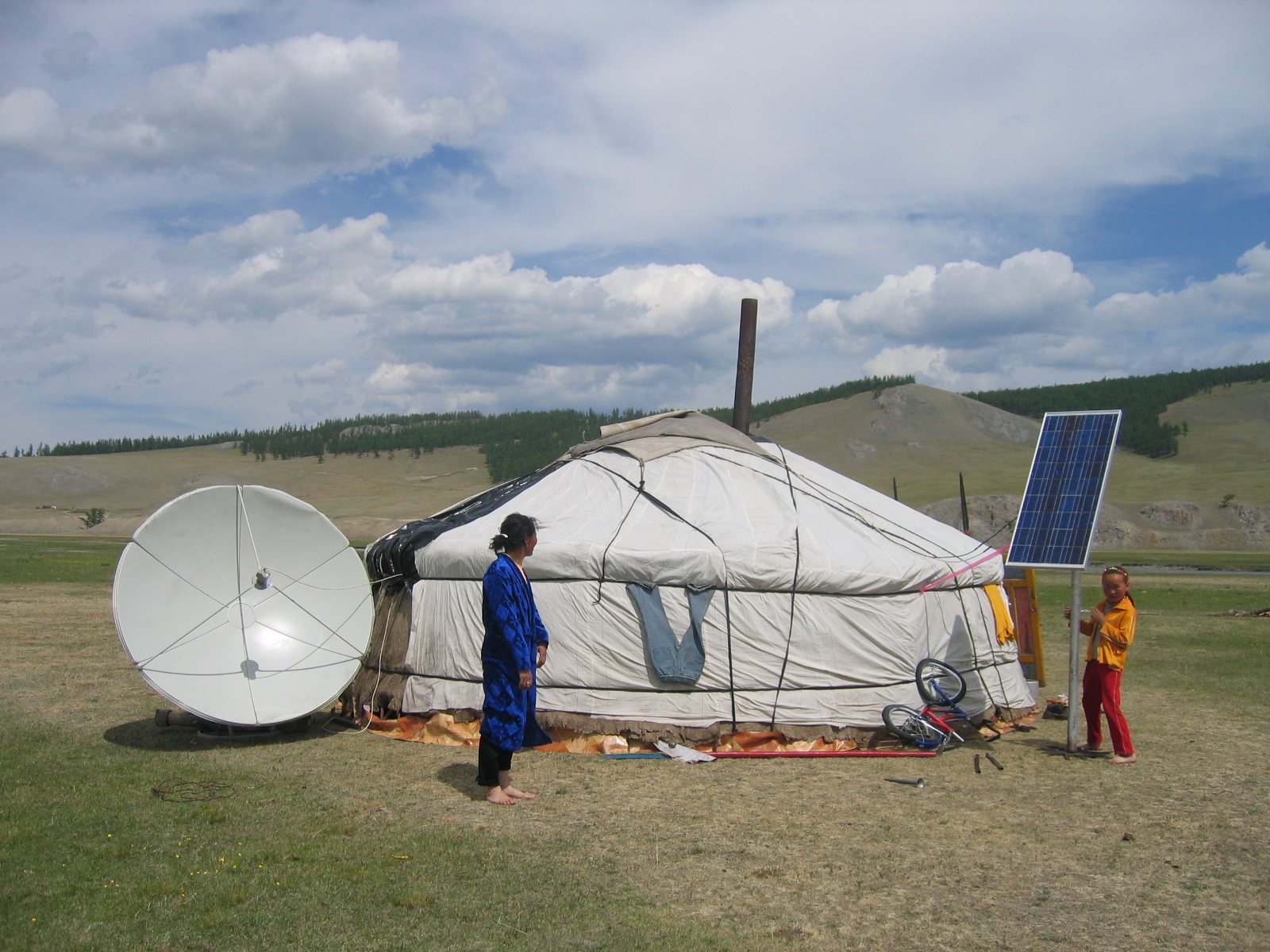
SpaceX’s service has a huge head start. According to its Wikipedia entry, Canada was the first country outside the U.S. to approve it, in November 2020, and the network had about 12 million subscribers worldwide by June 2026. By 2026, Global News reported that Starlink had become Canada’s sixth-largest internet provider, and iPhone in Canada put its Canadian subscriber base at more than 500,000. Global News described it as, for now, the only realistic solution for many rural and remote communities.
Telesat Lightspeed
Ottawa-based Telesat is building Lightspeed, aimed mainly at businesses, governments, telecom carriers and the military rather than individual households. The company says the constellation will reach an anticipated global in-service date in the first quarter of 2028, with 225 satellites planned. The satellites are built by MDA Space in Montreal, and Telesat has contracted 14 SpaceX Falcon 9 launches to put them up. Yes, Canada’s Starlink alternative depends on SpaceX rockets to get into orbit.
Public money is substantial. According to iPhone in Canada’s summary, it includes a $2.14-billion federal repayable loan for Lightspeed, $600 million to secure future broadband capacity, and a $2.3-billion military communications contract signed in August 2026 that added satellites to the plan. Telesat calls Lightspeed the largest space program in Canada’s history.
Amazon Leo (formerly Project Kuiper)
Amazon renamed Project Kuiper as Amazon Leo in November 2025. Its planned constellation is 3,236 satellites. After a July 2, 2026 Atlas V launch, Amazon said it had 396 satellites deployed and planned an initial service rollout later in 2026. Amazon hasn’t announced Canadian consumer availability or pricing that we could find, so for now it’s one to watch rather than one to buy.
What it actually costs
Pricing changes constantly, and promotions vary by region, so treat these as snapshots rather than quotes.
| Starlink Canada residential plan | Advertised speed | Promotional price (May 2026, first 3 months) |
|---|---|---|
| Residential 100 | 100 Mbps | $39/month |
| Residential 200 | 200 Mbps | $79/month |
| Residential Max | 400+ Mbps | $109/month |
Those figures come from a May 2026 promotion for new customers that also waived hardware costs. Starlink itself cautions that speeds reflect network averages and aren’t guaranteed. Regular rates are higher once the promotion ends, so read the fine print. Portable “Roam” plans for cottages, RVs and boats are priced separately; in September 2026 Starlink began offering free Mini dish rentals to more Canadian residential subscribers.
A practical checklist before you sign up:
- Check whether fibre or fixed wireless is planned for your area through a federal or provincial program. It may be cheaper long-term.
- Confirm you have a clear view of the northern sky. Trees are the most common cause of dropouts.
- Factor in power use if you’re off-grid or on solar.
- Note the regular price after any promotion, and whether hardware is bought or rented.
The politics: Ontario’s cancelled deal
The sovereignty debate isn’t abstract. In November 2024, Ontario signed a $100-million deal with Starlink to connect about 15,000 northern households. After U.S. tariffs hit in 2025, Premier Doug Ford cancelled it. Global News later reported that Ontario would miss its goal of connecting all households by the end of 2025, pushing the target to 2028, partly because of the cancellation and partly due to construction delays. Government sources told Global News there was no viable satellite alternative.
That episode shows the bind. A foreign-owned network can be the fastest way to connect remote communities, and also a dependency that a government may later regret. As researcher Susan Skone told Global News, the concern is when a foreign provider can switch service off “at will.”
The costs we don’t see: astronomy and debris
Light pollution, of a new kind
Astronomers raised alarms early. In 2019 the International Astronomical Union warned that, with tens of thousands of satellites, wide-field surveys like the Rubin Observatory could see up to 30 per cent of 30-second twilight images affected by satellite trails. The IAU now runs a Centre for the Protection of the Dark and Quiet Sky to work with operators on reducing brightness and radio interference. For a country that prizes its dark rural skies, this isn’t only a professional astronomers’ problem.
Crowded orbits
The European Space Agency’s 2025 Space Environment Report counted about 40,000 tracked objects in orbit, including roughly 11,000 active payloads, and estimated more than 1.2 million debris fragments larger than one centimetre. ESA warns that, even with no new launches, debris would keep growing because fragmentations add pieces faster than they burn up. Intact satellites or rocket bodies now re-enter the atmosphere more than three times a day on average.
LEO operators argue that their low altitude is part of the solution: dead satellites fall back and burn up within years, not centuries. That’s true, and it’s a meaningful advantage over higher orbits. But it also means constant replacement launches, and a lot more hardware passing through the busiest shells of space.
What rural Canadians should take from all this
If you live beyond the reach of fibre, LEO satellite internet is the best option most Canadians have ever had, and right now that mostly means Starlink. It works, it’s getting cheaper, and capacity is about to jump with the V3 satellites. Telesat’s Lightspeed matters for national security and for the telecom carriers and governments that will resell its capacity, but it isn’t designed as a direct consumer replacement, and it won’t be in global service before 2028. Amazon Leo could add real competition if it comes to Canada.
Our view: rural households should buy what works today while watching for fibre and fixed wireless projects funded in their area, which usually beat satellite on cost and reliability once they arrive. The bigger policy question, how much of the country’s connectivity should run through one foreign company’s network, is one Ottawa has clearly decided to answer. The bill for that answer is now well into the billions, and the satellites are still on the ground.
Sources and further reading
- ISED: High-speed internet for all of Canada
- ISED: Universal Broadband Fund
- CRTC: Broadband Fund
- Global News: Satellites are Canada’s next sovereignty frontier
- Global News: Ontario won’t meet rural broadband target
- Starlink: Standard kit specifications
- Wikipedia: Starlink
- Telesat: Europe’s first Lightspeed gateway
- Telesat: Named to the TSX30
- Amazon: Project Kuiper becomes Amazon Leo
- Amazon: Leo launch progress updates
- iPhone in Canada: Carney wants Canada off Starlink
- iPhone in Canada: SpaceX launches Starlink V3
- iPhone in Canada: Starlink’s $39 Canadian promotion
- iPhone in Canada: Starlink expands free Mini rentals
- International Astronomical Union: Statement on satellite constellations
- IAU Centre for the Protection of the Dark and Quiet Sky
- European Space Agency: Space Environment Report 2025





Leave a comment